
India is making a significant push to establish itself as a global semiconductor manufacturing hub, driven by strategic investments and policy support. The upcoming SEMICON India 2026 event will showcase the country's advancements and ambitions in this critical industry, which underpins virtually all modern electronic devices and has faced global supply chain vulnerabilities.

Delhi Lieutenant Governor Taranjit Singh Sandhu highlighted the transformative potential of artificial intelligence in enhancing urban governance. He stressed that AI can address complex administrative challenges, improve efficiency in areas like traffic management and environmental monitoring, and shift governance towards an intelligence-driven model, provided it is human-centric and reflects India's diverse context.

Arunachal Pradesh Chief Minister Pema Khandu lauded the state's first 10-day artificial intelligence boot camp and hackathon at IIT-Guwahati. The programme aims to build AI skills, promote innovation, and create a future-ready digital workforce, offering hands-on training in AI/ML, Python, and NLP to 40 young participants.

'This creates a lot of uncertainty. I am not sure if I want to be here, but then a lot of this now depends on my company.'

Indian cricket fans travelled thousands of kilometres, paying exorbitant prices for tickets and travel, to witness the India-Pakistan men's cricket final at the Asian Games in Nagoya, Japan, creating an atmosphere reminiscent of a stadium back home.
A new global survey by HP reveals that a majority of Indian students are concerned that while AI helps them work faster, it prevents them from learning material as deeply. Despite these worries, students remain optimistic about AI's role in future job markets and feel confident in using AI tools responsibly. The report calls for policymakers to focus on durable skills and core education.

The Union finance ministry has constituted a high-level committee, chaired by former Central Vigilance Commissioner Suresh N Patel, to recommend structural, regulatory, and legislative reforms for India's banking sector, aiming to make banks globally competitive and support the financing needs of a developed economy.

A two-day weekend would help employees recover physically and mentally. They would return better prepared for branch work that demands patience, judgment, and accuracy, asserts Tamal Bandyopadhyay.
Tata Consultancy Services (TCS) has launched India's first Oracle AI Data Platform Lab and Centre of Excellence (CoE) in Kolkata, in collaboration with Oracle. This facility aims to help enterprises accelerate the adoption of artificial intelligence and data-driven transformation by addressing challenges like fragmented data and limited AI scalability. The lab will leverage Oracle's AI Data Platform and TCS plans to expand similar CoEs to four more Indian cities.

TRAI Chairman Anil Kumar Lahoti highlights the increasing importance of Artificial Intelligence in the design, management, and experience of telecom networks in India, noting its role in self-optimising networks, cybersecurity, and preparing for 6G technology.

The political confidence required to place high-end Japanese aircraft and personnel on Indian soil is itself a data point.
It indicates a level of trust that would have been difficult to imagine when India-Japan defence ties were largely symbolic, explains Varun Arya.
Air India is significantly embracing artificial intelligence to enhance operational efficiency, improve customer services, increase revenues, and reduce costs as part of its ambitious transformation plan under the Tata Group.

Prime Minister Narendra Modi has urged for a global framework to combat cross-border cyber frauds and deepfakes, highlighting the need for governments, tech companies, telecom operators, and financial institutions to collaborate. Speaking at the India Mobile Congress 2026, Modi stressed that technology thrives on trust and that India is ready to share its expertise in tackling cyber threats. He also noted the rapid expansion of 5G and the success of digital governance initiatives like Direct Benefit Transfer.

The Unified Payments Interface (UPI) has completed a decade since its launch, becoming the backbone of India's digital payments ecosystem. It has seen exponential growth in transaction volume and value, expanding financial inclusion and setting a global benchmark for real-time payments.

Karnataka Chief Minister D K Shivakumar announced the establishment of India's first government-driven Artificial Intelligence University and an AI Hub in Bengaluru. This initiative aims to position Karnataka as a global leader in responsible AI innovation, fostering talent, research, and collaboration. The state seeks to become an AI-native state, leveraging AI to improve governance and daily life across various sectors.

Arundhati Bhattacharya, Salesforce President and CEO for South Asia, stated that cloud and AI are democratising capabilities, offering India a unique opportunity to leapfrog in technology. Speaking at the IMC Chamber of Commerce, she emphasised that AI will create more jobs and urged Indian businesses to transform using technology, rather than merely digitising. She also highlighted the significant economic potential of AI adoption for India.

'Peter Hegemann was so kind that a paper published in 2010 in Nature Method which mentioned optogenetic as a tool of the year, he wrote, 'My graduate student Suneel Katariya was the one who identified gene in coding channelrhodoxin and that was the turning point of my research'.'

Airbus has inaugurated a state-of-the-art technology centre in Bengaluru, India, significantly expanding its strategic presence and supporting its 'Make in India' mission.

While AI can help automate routine, repetitive tasks, jobs that require high emotional intelligence, communication skills, creativity and the ability to work in unpredictable situations are likely to withstand the rise of AI, says Kumar Rajagopalan, vice president (strategic initiatives) and country head (India), at Dexian, a global provider of IT consulting, digital transformation and workforce solutions.

For AP, retirement will bring a change of uniform. For the rest of us, it will be another reminder of how far we have travelled since those days at the Academy. The Air Force will miss him. Air Commodore Nitin Sathe (retd) salutes Amar Preet Singh, his NDA coursemate, as he retires as chief of the air staff.

India's Unified Payments Interface (UPI) recorded an unprecedented 24.51 billion transactions valued at Rs 29.8 lakh crore in August, largely propelled by the Raksha Bandhan festival. This surge marks a 22% annual increase in volume and 20% in value, highlighting the expanding reach and depth of the UPI ecosystem. Experts anticipate further growth during the upcoming festive season, while UPI's international acceptance now spans 11 countries.

US Ambassador to India, Sergio Gor, highlighted the evolving US-India space partnership, moving from cooperation to "co-creation" at the Bengaluru Space Expo. He emphasised joint design, funding, and co-authoring the future of human discovery, citing the NISAR satellite and India's participation in the Artemis Accords as key examples of this growing synergy.

Microsoft has inaugurated its India South Central datacenter region in Telangana, marking its fourth cloud region in the country. This expansion aims to bolster India's cloud and AI infrastructure, with Telangana targeting 5 GW of datacenter capacity by 2029 and attracting significant investment in the digital ecosystem.
Telecom industry body COAI and the British High Commission signed an MoU to boost cooperation in AI, connectivity, and digital trust, fostering responsible tech innovation. The pact, signed at the CO.AI 2026 event, focused on AI's role in intelligent networks, security, and public services. Discussions highlighted AI's importance in combating fraud, improving network efficiency, and ensuring secure digital services. TRAI Chairman Anil Kumar Lahoti and Acting British High Commissioner Ben Mellor emphasised the need for balanced governance and international collaboration to ensure secure, inclusive, and responsible digital transformation.

Prime Minister Narendra Modi, addressing the nation from the Red Fort on Independence Day, declared that India is undergoing a rapid transformation across various sectors and is firmly on track to become a developed nation by 2047.

TRAI Chairman Anil Kumar Lahoti has called for robust safeguards, human oversight, and intervention capabilities as Artificial Intelligence becomes increasingly integrated into telecom networks. While acknowledging AI's potential to transform network management and threat detection, Lahoti stressed the need for responsible AI deployment, risk assessments, and clear accountability to ensure consumer trust and prevent misuse, especially in combating online fraud.

In the next 36 months nearly 25 to 40 per cent of jobs will be under threat from AI and job losses are inevitable.
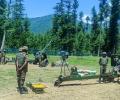
The Indian Army has launched 'Bharat Rice', a superior-quality rice for defence forces, aimed at improving ration quality and logistics. This initiative, spearheaded by the Directorate General of Supplies and Transport, involves direct supply to Army Supply Depots, including remote areas, and an MoU with FCI for infrastructure utilisation during contingencies. Defence Minister Rajnath Singh highlighted its significance for soldier welfare, operational readiness, and national security, emphasising logistics as combat power.
Renowned filmmaker Rajkumar Hirani believes artificial intelligence will entirely transform the film industry, making production more cost-effective and efficient. He highlights AI's potential as a "game changer" while also cautioning that its effective use requires extensive research and adaptation.

BRICS members have expressed 'serious concerns' over the unilateral imposition of trade and finance-related measures, including higher tariffs and non-tariff barriers, stating these actions distort trade and are inconsistent with WTO rules. The grouping also highlighted elevated risks to the global economic outlook due to geopolitical tensions, trade fragmentation, and protectionism.

Deloitte India has partnered with IIT Bombay to launch a Quantum Technology Centre, aiming to accelerate quantum adoption, research, and enterprise use-cases for Indian businesses.
Chief Justice of India Surya Kant stated that the Supreme Court views technology as an aid to human reasoning, not a replacement, and emphasised developing "Swadeshi Jurisprudence" tailored to India's unique conditions. He highlighted efforts to create an indigenous AI ecosystem for the judiciary and stressed that AI cannot substitute human judgment, empathy, or ethical discernment.

A new report by Philips indicates that Artificial Intelligence is significantly enhancing healthcare in India, with 71% of professionals reporting increased patient capacity and 85% believing it improves patient outcomes. AI is also seen as a tool to improve access to quality healthcare in rural areas, with patients also embracing its benefits for more meaningful interactions with doctors.
Vice President CP Radhakrishnan launched Gnani Artha, an end-to-end sovereign AI stack for Indian enterprises and public institutions. He emphasised that new technologies, including AI, will enhance ease of work and create more jobs, drawing parallels with the IT industry's growth. The initiative, backed by the India AI Mission, aims for self-reliance and includes the Gnani Evon v3.3 language model and Gnani Plexus AI platform, offering cost-effective Indic language capabilities.
Vice President CP Radhakrishnan launched Gnani Artha, an end-to-end sovereign AI stack for Indian enterprises and public institutions. He emphasised that new technologies, including AI, will enhance ease of work and create more jobs, drawing parallels with the IT industry's growth. The initiative, backed by the India AI Mission, aims for self-reliance and includes the Gnani Evon v3.3 language model and Gnani Plexus AI platform, offering cost-effective Indic language capabilities.

Japan is deepening its defence relationship with India while simultaneously expanding its economic, infrastructure and security engagement with countries around India -- particularly Bangladesh. The result is an emerging Japanese conception of South Asia in which India remains the strategic anchor, but the geography surrounding India is becoming increasingly important, points out Varun Arya.

Few leaders since Independence have been able to establish such a direct connection with the electorate or shape the national conversation to the extent that Narendra Modi has done over the past decade, points out former Union minister Dr Karan Singh.

India's IT services industry is witnessing a surge in mergers and acquisitions, particularly among mid-cap companies, as AI-led pricing pressure and macroeconomic uncertainty compel firms to seek scale, capabilities, and broader market reach. This trend is exemplified by the recent merger of Happiest Minds Technologies and ITC Infotech, aiming to offer end-to-end solutions and compete for larger transformation programmes.

Industry leaders at an AIMA panel discussion emphasised the need for businesses to quickly adapt to changing market conditions and invest in technologies like artificial intelligence to build resilience and achieve long-term growth. They highlighted the current era of uncertainty driven by geopolitical tensions, supply chain disruptions, and rapid regulatory changes, stressing that tactical responses are as crucial as long-term strategy.

RBI Deputy Governor Rohit Jain discussed the future of India's foreign exchange markets, highlighting the increasing role of local currencies in cross-border trade, the impact of technology, and existing challenges. He emphasised the need for market evolution to facilitate India's global engagement, absorb shocks, and serve all users efficiently. Jain also addressed concerns about unauthorised forex trading platforms and the importance of customer awareness.
